“An autonomous agent that a dispatcher cannot interrogate is a support ticket. So we built the agent that answers to the dispatcher — that shows its math, keeps its receipts, and stops the moment it isn’t sure.”
Client project · Red Dog Logistics · Freight brokerage An autonomous freight agent on top of T-TMS
An autonomous freight agent that never books a load it can’t verify.
Built for Red Dog Logistics. Lives in the dispatcher’s own Outlook. Scores carriers on a hundred-point scale, negotiates within margin guardrails, and stops the moment it isn’t sure. It runs while you sleep. It never overrides your judgment.
What we were hired to build.
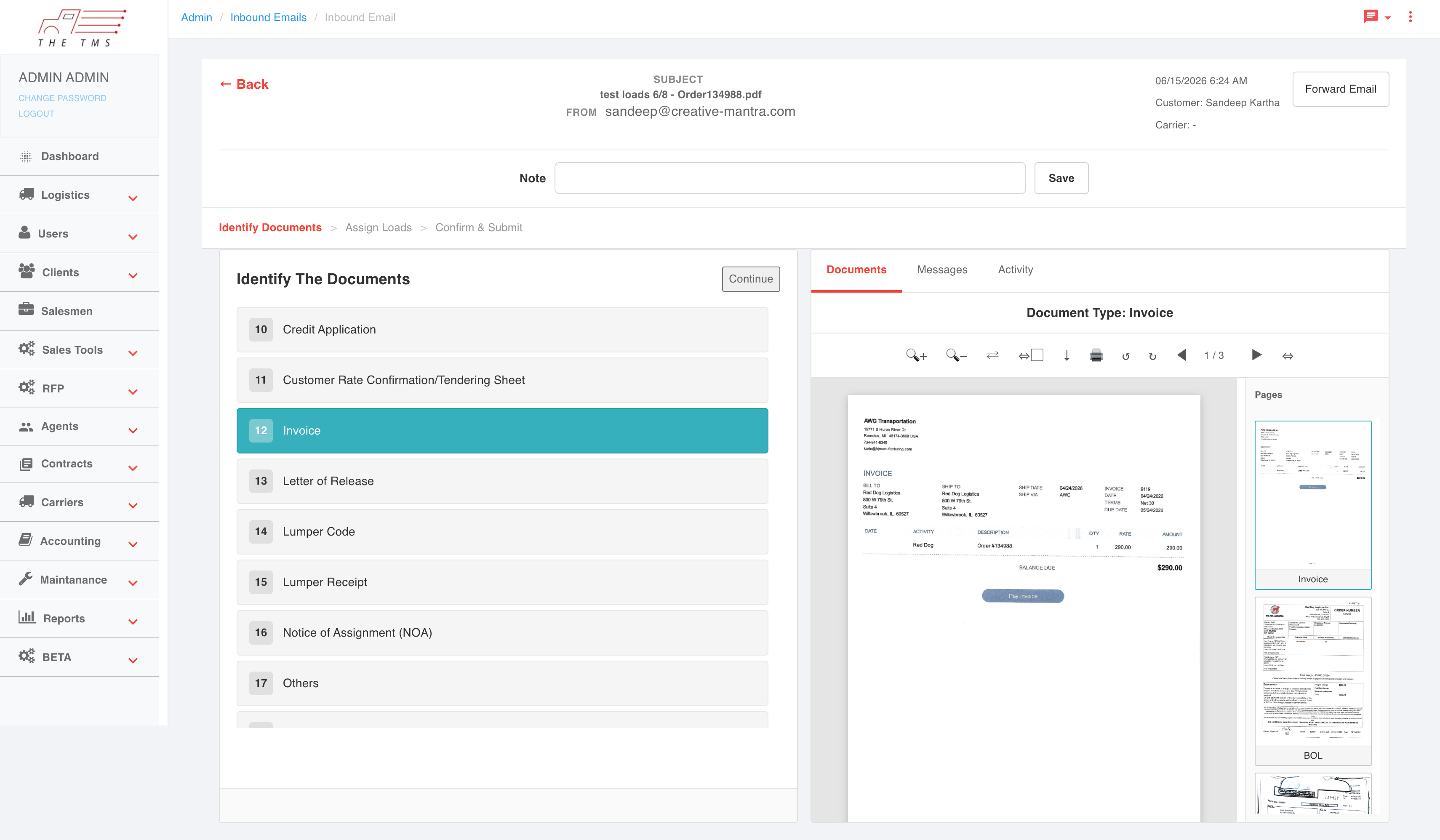
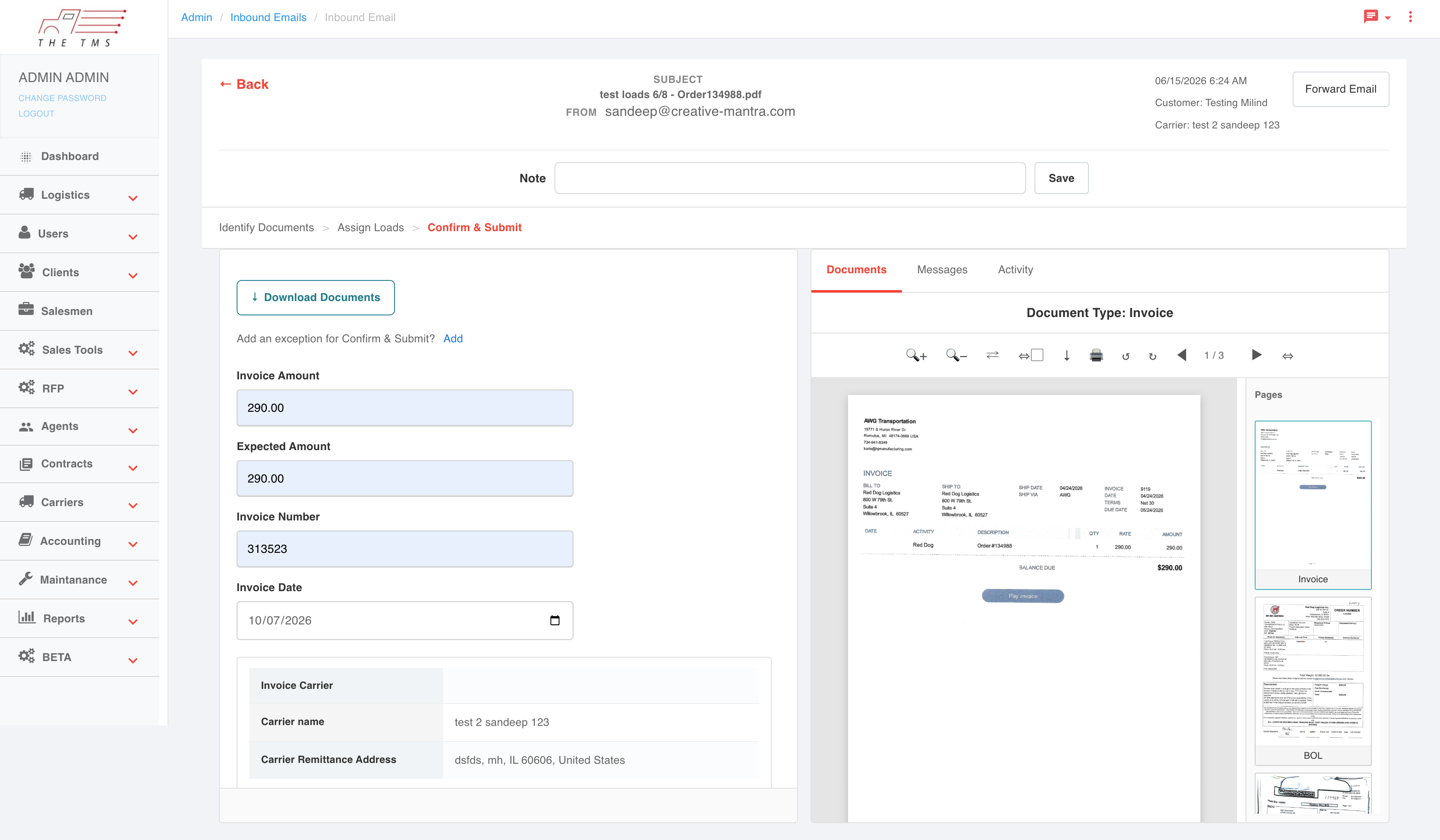
TTMS Mailer is an autonomous AI agent built on top of T-TMS for freight brokers. It runs the end-to-end brokerage workflow without human intervention — syncs emails via Microsoft Graph, classifies inbound freight communications into six categories, extracts load details from emails and attachments, matches carrier replies to loads, scores carriers on a 100-point scale, generates personalised rate offers, negotiates within guardrails, and books loads in T-TMS when carriers accept. Two parallel pipelines serve outward-facing email and internal teammate requests; three operating modes (Off, Test drafts, Live autonomous) give dispatchers full control.
Guardrails before autonomy.
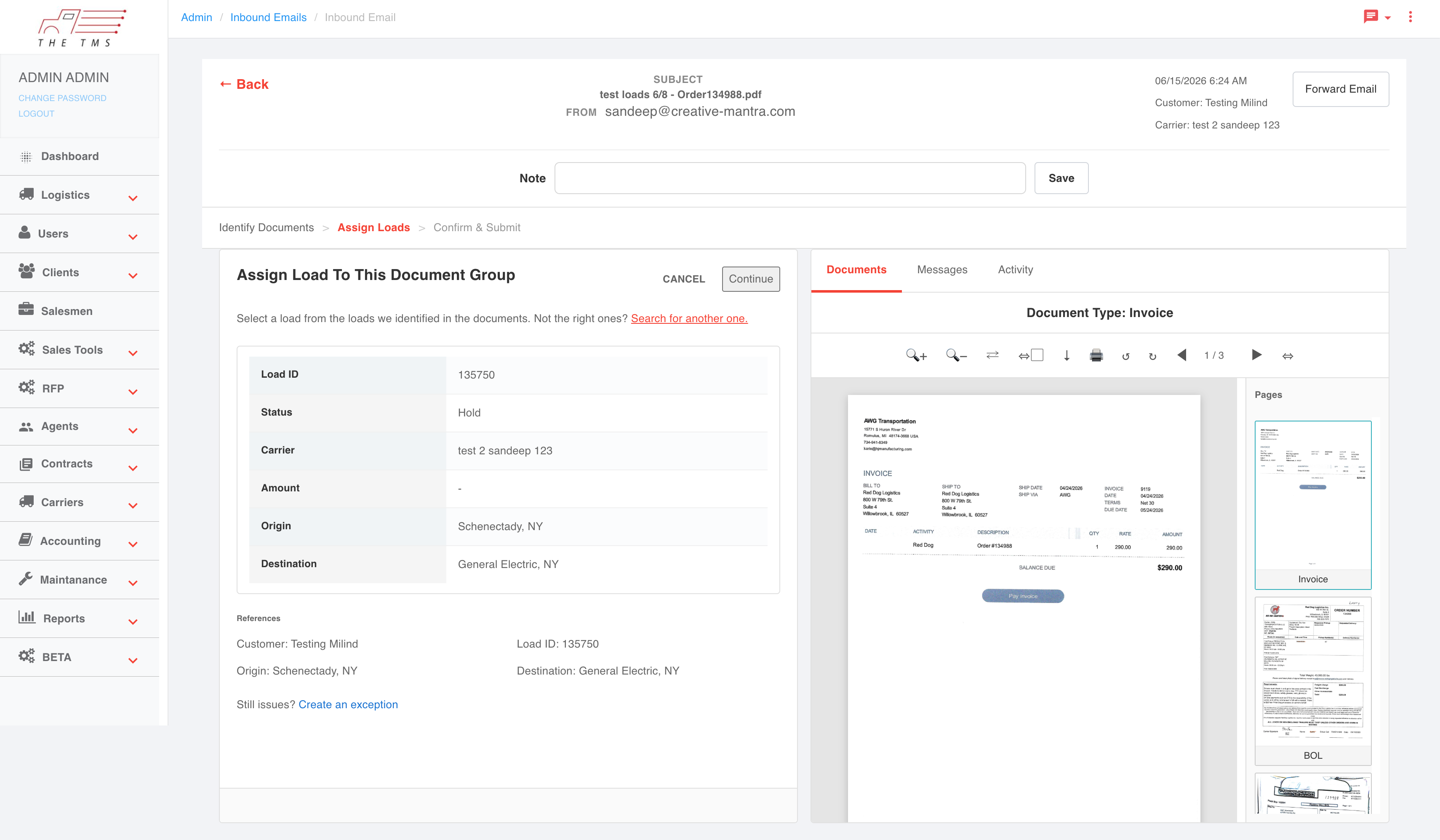
Architecture uses Microsoft Graph webhooks (35+ mailboxes at Red Dog Logistics) for real-time email ingestion, Google Gemini 3 Flash for email classification, and Claude Sonnet 4.6 with prompt caching and tool-use for the orchestrator. A specialised carrier-scoring engine (lane history 35pts, rating 25pts, approval 15pts, insurance 15pts, active status 10pts, response-history modifier ±15pts) ranks outreach order. The rate engine synthesises DAT market data, TTMS historical orders, lane boundaries and learned carrier patterns, enforcing a 14% target margin plus a $125 hard floor. Load matching uses three ordered strategies — explicit order ID, PO/reference lookup, address+rate fuzzy match — with a “wrong-order guard” that hard-stops if an explicit order ID fails.

Off · Test · Live. Three modes, one loop.
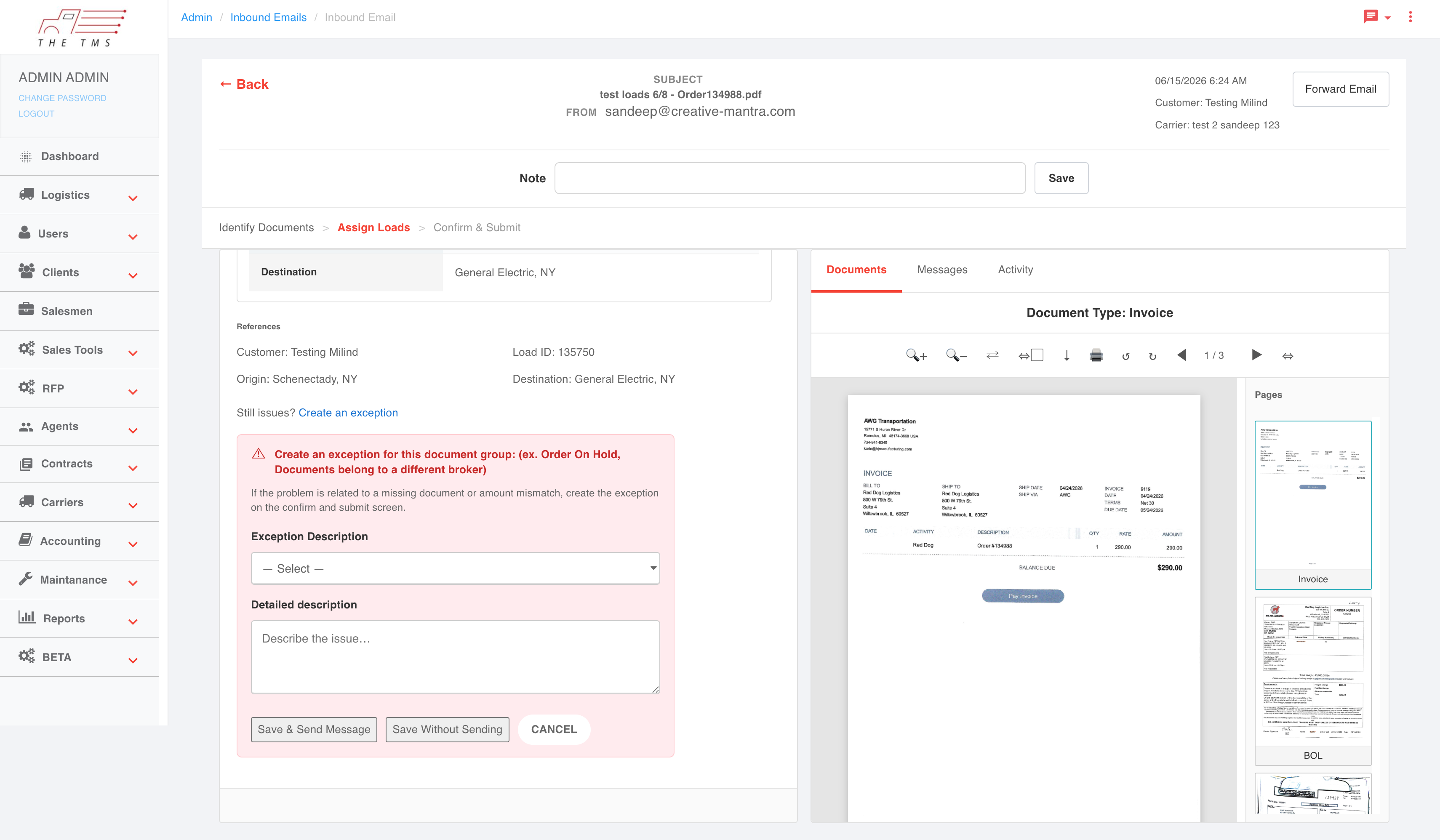
A Vercel serverless Next.js app with Supabase PostgreSQL backend and a daily 9 PM UTC cron cycle that processes all enabled users’ inboxes. Test mode routes replies to drafts for manual review (byte-identical to Live mode — not a preview). Live mode sends autonomously if confidence thresholds and margin floors are met. Mid-confidence emails route to a human review queue. Escalation gates catch low-confidence decisions, margin violations, legal language and keyword triggers. Every AI action is logged; cost is tracked per request (approximately $0.01 per cycle).
The wrong-order guard is the whole trust story.
The wrong-order guard is the single most important safety rail — the difference between an agent you trust and an agent that books the wrong load once and gets switched off. The learning loop works at two levels — carrier-level (blast history, response patterns) and lane-level (acceptance rates, closing times) — with nightly pattern distillation injecting learnings into the next day’s prompts. Model selection matters: Gemini 2.5 Pro as default and Sonnet 4.6 only for high-stakes orchestration keeps the loop economical enough to run 24/7 (approximately $7/month per active user).
From email triage to autonomous load booking.
Red Dog Logistics moved from manual email triage to autonomous load booking. Dispatchers who spent 6 hours a day on tender responses and carrier negotiations now receive pre-scored carrier offers and negotiation outcomes; load velocity increased measurably (3–10× faster offer delivery on internal metrics). The AR coordinator triaging 200+ daily emails now reviews only the ~15–20% escalations. Full audit trail on every decision.
“One wrong-book is worth a thousand right-books that never happened.”
The engineering, in one page.
Nine Vercel cron jobs, one daily 9 PM UTC cycle. Three operating modes: Off, Test drafts (byte-identical to Live but routed to drafts), Live autonomous. Two pipelines — outward-facing email and internal teammate requests. Three load-match strategies — explicit order ID, PO/reference lookup, address+rate fuzzy — guarded by a wrong-order hard-stop. Every AI action logged. Approximately $7/month per active user.
DentalAuto — the AI operator for a dental practice. Both halves.
Thirty-five mailboxes on one side. A fine-tuned caries model on the other. Every decision routed to a clinician for the final call. Krest One Dental’s paperwork and imaging, on one operator, with a human between the model and the money.
You THINK, We BUILD.
Send a paragraph about what you’re building to hello@creative-mantra.com. We reply within 24 hours with next steps and, for qualified scopes, a fee letter within four working days.